Reflection
This project exemplified my ability to apply strong UX and product design skills to complex, AI-driven systems.
By combining human-centered design principles with data-driven insights, I helped CAE build a smarter, more efficient operational workflow that empowered employees to focus on strategic actions over administrative tasks, delivering measurable impact across the organization.
Client: CAE Inc. – Global leader in simulation and training systems
Role: UX & Product Designer | AI-Driven Application Design
Project Overview
CAE is a global leader in civil, defense, security, and medical training. The company develops state-of-the-art flight and medical simulators, empowering pilots to train on a wide range of civilian and military aircraft, while also equipping medical professionals to master complex procedures through immersive solutions.
At CAE, I spearheaded the design and architecture of innovative AI-powered applications aimed at enhancing the management and scheduling of pilot training sessions. My goal was to optimize both simulator utilization and pilot time, directly impacting operational efficiency and profitability.
Security Clearance & Industry Recognition
Due to the sensitive nature of this project, I underwent a stringent vetting process under Canada’s Controlled Goods Program (CGP). This required a comprehensive review of my academic credentials, professional background, and references. My professional references highlighted my successful track record in designing impactful applications across sectors such as banking, government, retail, and technology.
AI-Powered Scheduling & Training Management
I designed and architected a pilot and simulator training reservation system where AI played a pivotal role in streamlining business processes and elevating the user experience. Given the high value and limited availability of simulator time, it was essential to maximize their use for CAE’s business outcomes.
Pilot scheduling is inherently complex, involving extensive documentation and unpredictable variables such as delays or incomplete paperwork. Missed training slots are costly, as finding qualified replacements at short notice is challenging.
Machine Learning for Disruption Mitigation
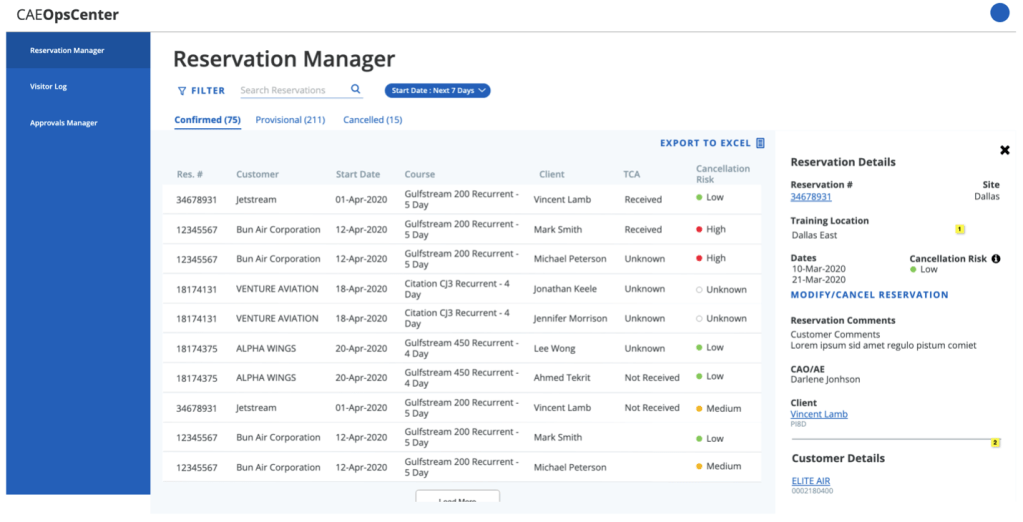
To address these challenges, I collaborated closely with data scientists and engineers to integrate machine learning into the scheduling process. I introduced probabilistic modeling to forecast the likelihood of training cancellations or disruptions, using historical data to inform these predictions. The application provided actionable insights, flagging high-risk slots and outlining possible causes and mitigation strategies.
This enabled account managers to proactively address potential issues with pilots or their organizations, ensuring all requirements were met ahead of time. By reducing last-minute disruptions, we maximized simulator occupancy and contributed to CAE’s profitability.
User-Centered Design & Global Collaboration
Throughout the project, I led user research initiatives and collaborated with international teams and stakeholders to validate and refine the application’s design. My approach emphasized usability and strategic decision-making, allowing employees to focus on higher-level tasks instead of manual data collection and analysis.
Key Impact & Personal Contribution
My tenure at CAE demonstrated my ability to drive transformative change in core business operations through technology. The AI-powered scheduling solution not only improved operational efficiency but also fostered a culture of proactive problem-solving. My background in Computer Science and Human-Computer Interaction, coupled with my commitment to excellence, positioned me as the ideal candidate for this critical, engineering-centric project.
1. Discovery & Research
- Conducted stakeholder interviews and collaborative workshops with engineers, data scientists, and global operations teams.
- Mapped the pilot training journey to uncover pain points and system inefficiencies.
2. AI + UX Integration
- Designed a tool in collaboration with data science and engineering that leveraged machine learning models trained on historical data to predict the probability of a training session being cancelled.
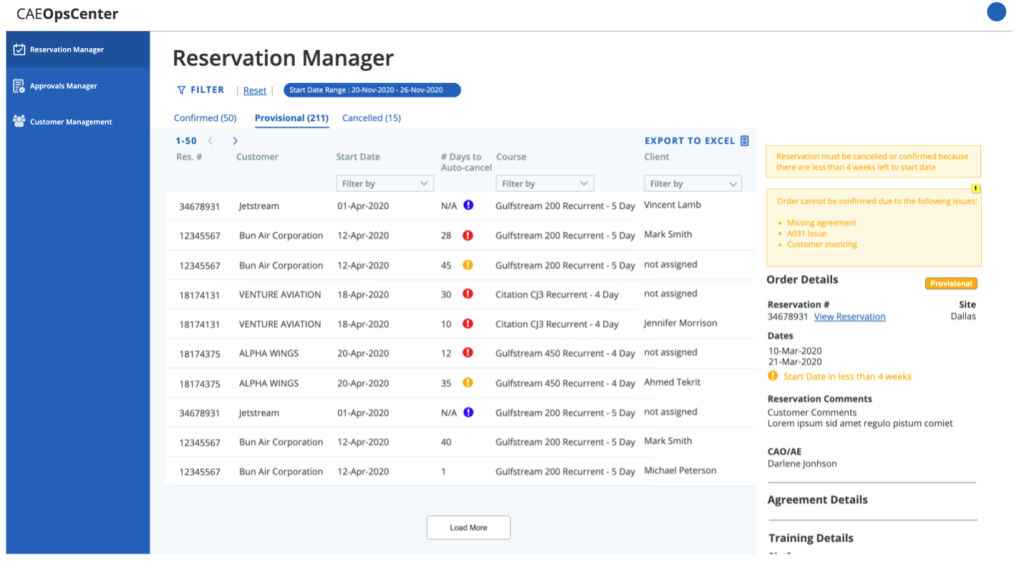
- Incorporated predictive insights and visual alerts to notify account managers of high-risk sessions and provide actionable mitigation steps.
3. Design Strategy
- Created progressive disclosure patterns to surface critical information contextually without overwhelming users.
- Built smart form logic to streamline data entry and documentation tracking, ensuring only relevant inputs were requested based on scenario complexity.
- Used Figma to develop high-fidelity prototypes, which were tested in iterative rounds with internal teams and international users.
4. Results & Value Delivered
- Reduced training session cancellations by enabling proactive intervention based on predicted disruptions.
- Improved simulator utilization – a key financial metric – by maximizing slot efficiency and minimizing idle time.
- Enhanced internal coordination between account managers, training ops, and compliance teams through a centralized, intelligent platform.
- Validated usability through cross-functional user testing and design iterations, ensuring adoption across business units.
