
How To Build Large Language Models

Introduction 

Large Language Models (LLMs) are Artificial Intelligence algorithms that use massive data sets to summarize, generate and reason about new content. LLMs are built on a set of neural networks based on the transformer architecture. Each transformer consists of encoders and decoders that can understand text sequence and the relationship between words and phrases in it. 

The generative AI technologies that have been enabled by LLMs have transformed how organizations serve their customers, how workers perform their jobs and how users perform daily tasks when searching for information and leveraging intelligent systems. To build an LLM we need to define the objective of the model and whether it will be chatbot, code generator or a summarizer.  

Building an LLM 

Building an LLM requires the curation of vast datasets that enable the model to gain a deep understanding of the language, vocabulary and context around the model’s objective. These datasets can span terabytes of data and can be grown even further depending on the model’s objectives [1].  

Data collection and processing 

Once the model objectives are defined, data can be gathered from sources on the internet, books and academic literature, social media and public and private databases. The data is then curated to remove any low-quality, duplicate or irrelevant content. It is also important to ensure that all ethics, copyright and bias issues are addressed since those areas can become of major concern as the model develops and begins to produce the results and predictions it is designed to do. 

Selecting the model architecture 

Model selection involves selecting the neural network design that is best suited for the LLM goals and objectives. The type of architecture to select depends on the tasks the LLM must support, whether it is generation, translation or summarization.  

  • Perceptrons and feed-forward networks: Perceptrons are the most basic neural networks consisting of only input and output layers, with no hidden layers. Perceptrons are most suitable for solving linear problems with binary output. Feed-forward networks may include one or more layers hidden between the input and output. They introduce non-linearity, allowing for more complex relationships in data [2]. 
  • Recurrent Neural Networks (RNNs): RNNs are neural networks that process information sequentially by maintaining a hidden state that is updated as each element in the sequence is processed. RNNs are limited in capturing dependencies between elements within long sequences due to the vanishing gradient problem, where the influence of distant input makes it difficult to train the model as their signal becomes weaker.   
  • Transformers: Transformers apply global self-attention that allows each token to refer to any other token, regardless of distance. Additionally, by taking advantage of parallelization, transformers introduce features such as scalability, language understanding, deep reasoning and fluent text generation to LLMs that were never possible with RNNs. It is recommended to start with a robust architecture such as transformers as this will maximize performance and training efficiency. 
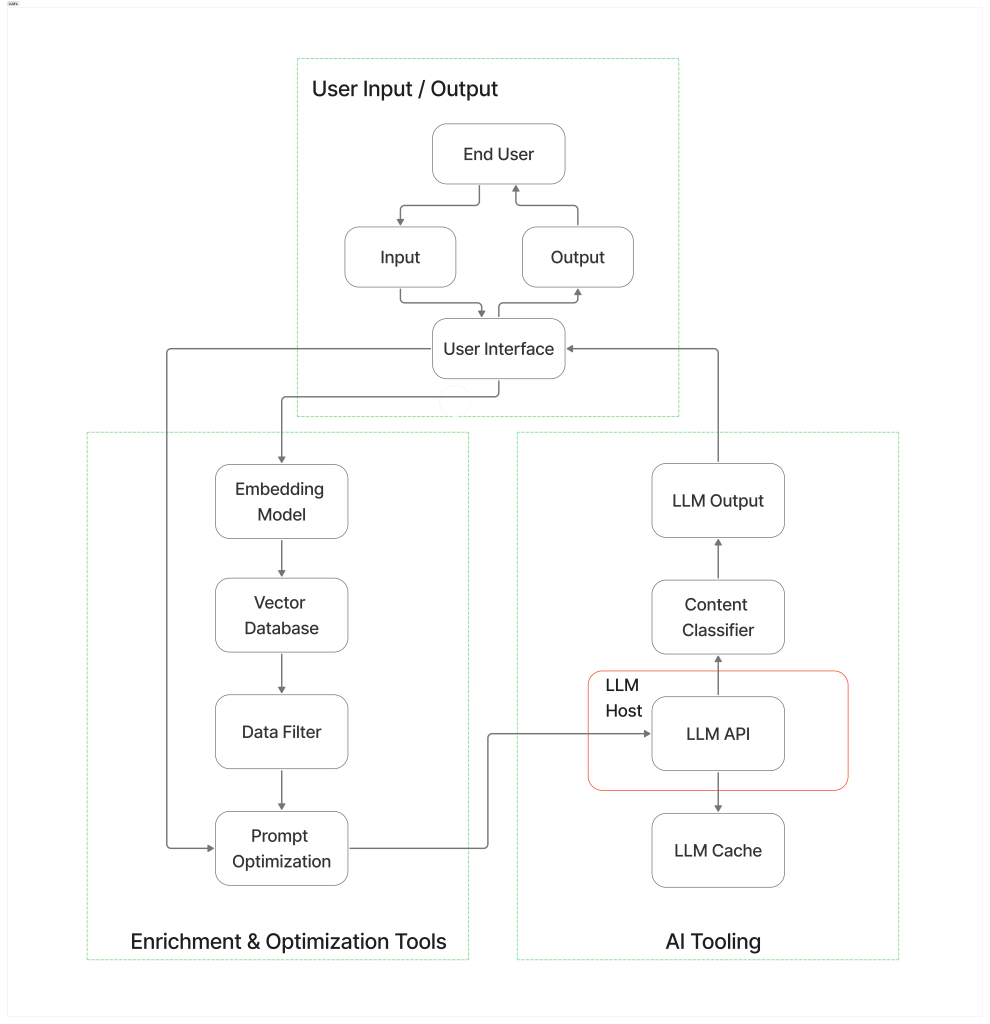
Figure 1. Example of an LLM architecture [3].

Implementing the model 

Implementing the model requires using a deep learning framework such as TensorFlow or PyTorch to design and assemble the model’s core architecture [4]. The key steps in implementing the model are: 

  • Defining the model architecture such as transformers and specifying the key parameters including the number of heads and layers.  
  • Implementing the model by building the encoder and decoder layers, the attention mechanisms, feed-forward networks and normalizing the layers.  
  • Designing input/output mechanisms that enable tokenized text input and output layers for predicted tokens. 
  • Using modular design and optimizing resource allocation to scale training for large datasets. 

Training the model 

Model training is a multi-phase process requiring extensive data and computational resources. These phases include: 

  1. Self-supervised learning where the model is fed massive amounts of data, so that it can be trained in language understanding and predicting missing words in a sequence.  
  2. Supervised learning where the model is trained to understand prompts and instructions allowing it to generalize, interact and follow detailed requests.  
  3. Reinforcement learning with Human Feedback (RLHF) involves learning with human input to ensure that output matches human expectations and desired behaviour. This also ensures that the model avoids bias and harmful responses and that the output is helpful and accurate.  

Fine tuning and customization 

Customization techniques include full model fine-tuning where all weights in the model are adjusted to focus on task-specific data. It is also possible to fine-tune parameters and engineer prompts to focus on smaller modules, saving resources and enabling easier deployment.  

Training a pre-trained model based on domain-specific datasets allows the model to specialize on target tasks. This is easier and less resource-intensive than training a model from scratch since it leverages the base knowledge already learned by the model. 

Model deployment 

Deploying the LLM makes it available for real-world use, enabling users to interact with it. The model is deployed on local servers or cloud platforms using APIs to allow other applications or systems to interface with it. The model is scaled across multiple GPUs to handle the growing usage and improve performance [5]. The model is continually monitored, updated and maintained to ensure it remains current and accurate.   

Ethical and legal considerations 

The ethical and legal considerations are important in the development and deployment of LLMs. It is important that the LLM is unbiased and that it avoids propagating unfair and discriminatory outputs. This extends to discriminatory and harmful content which can be mitigated through reinforcement learning with human feedback (RLHF).  

Training data may contain sensitive and private information, and the larger the datasets used to train the model the greater the privacy risks they involve. It is essential that privacy laws are adhered to and followed to ensure the models can continue to evolve and develop while preventing unintended memorization or leakage of private information. 

Copyright and intellectual property must also be protected by ensuring that the proper licenses are obtained. Regular risk and compliance assessments and proper governance and oversight over the model life cycle can help mitigate ethical and legal issues.  

Conclusion 

Developing and deploying an LLM in 2025 requires a combination technical, analytical and soft skills. Strong programming skills in Python, R and Java are critical to AI development. A deep understanding of machine learning and LLM architectures including an understanding of the foundational mathematical concepts underlying them, are also critical. It is also important to have a good understanding of hardware architectures including CPUs, GPUs, TPUs and NPUs to ensure that the tasks performed by the LLM are deployed on the most suitable hardware to ensure efficiency, scalability and cost-effectiveness.    

Other skills related to data management, problem-solving, critical thinking, communication and collaboration, and ethics and responsible AI are also essential in ensuring the models remain useful and sustainable. 

References 

[1] The Ultimate Guide to Building Large Language Models 

[2] Feedforward Neural Networks 

[3] The architecture of today’s LLM applications  

[4] How to Build a Large Language Model: A Comprehensive Guide 

[5] Large Language Model Training in 2025  

Case Study: Designing an AI-Driven Product with Strategic Ownership

“In complex AI systems, clarity is not a bonus—it’s the core feature. Product Designers must lead the charge, not just in how things look, but in how they think and work.”

Project Overview

In this case study, we examine a team that has recognized the potential of Machine Learning (ML) and Artificial Intelligence (AI) to refine and enhance a longstanding methodology for forecasting product order volumes. By leveraging AI and ML, the team can achieve more precise ordering based on those forecasts, while also gaining the capability to monitor market prices and receive insights on how to adjust orders to minimize costs. Historically, this team has relied on Excel for manual and meticulous user input, maintaining continuous communication among members and adhering to a process honed over several decades. While this approach has been effective, they have now realized that integrating AI and ML can significantly enhance their workflow by handling larger datasets at a faster pace and generating profound insights aimed at maximizing efficiency, reducing costs, and driving business growth.  

Role of the Product Designer

The Product Designer in this role helped initiate a significant project aimed at transforming a long-standing, Excel-based process into a web-based application. This endeavor required not only a user-centered design approach but also an understanding of how AI and ML can be applied effectively to realize the project goals and meet the users needs.

To achieve this, the Product Designer addressed the following considerations:

  • What processes were being followed?
  • How did users use Excel for data entry and forecasting?
  • Which identified business processes needed to be maintained, which could be enhanced with AI, and which could be replaced entirely?
  • Where could AI and ML introduce efficiencies and savings, and provide valuable insights?
  • Were the identified AI efficiencies and insights aligned with user expectations?
  • How would the design help users provide inputs easily, and act upon AI-generated outputs and insights?
  • How would the design help users enhance their work efficiency and enable them to focus on more strategic and human-centric tasks?

At this stage, and before any of the AI models and algorithms were developed, the Product Designer assumed a strategic role in defining the foundational framework for the data the AI models would use and the outputs and insights they would generate for user consumption and action.

By adopting a product owner’s mindset and taking on a strategic role in determining the user requirements as they pertained to the AI models, the Product Designer shaped the product through the following actions:

  • Identifying key stakeholders through close collaboration with the project manager
  • Gaining an understanding of the current business process and the value the project proposes to achieve
  • Developing interview scripts designed to deepen understanding of:
    • The current business process and how Excel is used to generate forecasts
    • The ideal product vision and how it aligns with the user needs and expectations, particularly as it applies to the use of AI and ML
    • How the product could add value to users’ day-to-day work
  • Scheduling and facilitating interviews with stakeholders.
  • Maintaining an openness to any additional insights gained during the interviews such as including additional stakeholders, and exploring other areas of the business as necessary.
  • Collecting and synthesizing feedback from the stakeholder interviews.
  • Establishing a framework based on the feedback analysis for user personas, user journeys and user flows.

These activities enabled the Product Designer to acquire deep insight into the current business process, the stakeholders and users and their roles, and most importantly, insights into the AI and ML user needs and what outputs would be expected .

Research & Discovery

Using the insights gained from stakeholder interviews, the Product Designer was able to:

  • Identify user personas based on the roles and users discussed during the interviews.
  • Conduct additional workshops to further refine the identified user personas.
  • Discover new opportunities for additional user personas not previously identified and develop them further.
  • Develop user journeys for key user personas or those with the most critical needs.
  • Create user flows that outline the application’s essential features, associated screens, inputs, and outputs.
  • Refine user flows, enhance identified features, and ascertain any missing components and data.
  • Develop an information architecture (IA) aimed at providing easy and intuitive navigation that prioritized productivity and ease of navigation between various sections of the application.

The outcome of this process was a well-defined product roadmap and vision that provided a clear framework for technical teams. Data scientists, engineers, back-end and front-end developers could use this roadmap, along with the user needs and technical requirements identified, to begin designing and developing AI models. This structured approach ensured that the AI models were not only functional but also optimized to enhance the user experience.

Designing with Clarity and Logic

The research and discovery phase provided essential insights, enabling the Product Designer to conceptualize how the application would meet users’ needs and allow the AI models to generate the necessary outcomes. The user flow diagrams established an information architecture that formed the basis for the features the application offered and the overall user experience. With the information architecture now established, wireframes and mockups were created to facilitate discussions with users regarding the design direction.

  • Wireframes and mockups enabled stakeholders and end users to understand how input is provided into the AI models and what the output would look like.
  • This stage was crucial in the product design process as it helped establish the foundation for robust AI models that would directly meet the users’ needs.
  • The wireframes and mockups were refined based on feedback from users and stakeholders through recurring reviews and workshops.

Wireframes, mockups, and user flows helped the Product Designer build a prototype that:

  • Assisted data scientists, engineers, front-end, and back-end developers in visualizing user input and the generated output in the application.
  • Assisted data scientists and engineers in understanding the requirements for data input and output processing, and design algorithms to meet these requirements.
  • Illustrated the detailed interactions necessary to enable users to calibrate their inputs into AI models.
  • Facilitated collaboration between back-end and front-end developers with data scientists and engineers to design and build APIs that support the flow of data and insights from AI models.
  • Allowed running usability testing sessions with end users to validate the design and iterate based on the feedback received.

The development of a prototype represented a significant milestone and underscored the strategic role of the Product Designer played in guiding stakeholders and users through discovery sessions, workshops and design reviews. The Product Designer’s efforts in understanding data input and output requirements, and visualizing them clearly as part of a prototype, enabled technical teams to design AI models and algorithms that met those requirement. This hybrid mindset adopted by the Product Designer, functioning as an intermediary between business strategy and technical execution, was pivotal in fostering collaboration among product, engineering, and data teams, ensuring a clear understanding of the product vision and roadmap.

To drive the success of this AI-enabled product, the Product Designer delivered a strategic and structured design process that included:

  • User personas, journeys, flows, and an information architecture that defined core behaviours and ensured the experience aligned with user needs.
  • Interactive prototypes, refined through multiple rounds of usability testing and stakeholder input.
  • Detailed interactions clearly outlining user inputs and the data required to support model performance.
  • Insight-driven visualizations, which shaped how AI outputs were presented and guided model design.
  • An end-to-end product roadmap, mapping the full product vision while enabling the extraction of an MVP and a plan for iterative, future releases.

Lessons Learned

In this case study, the product designer started their work by identifying users’ needs and pain points related to an existing business process. Stakeholders and users wanted to explore how AI and ML could introduce savings and efficiencies into their business.

The designer’s responsibilities included identifying and analyzing the problem, and integrating ML and AI solutions through extensive collaboration with stakeholders, product managers, engineers, and data teams. This collaboration was crucial for the designer to articulate the product vision using a user-centered approach while also providing comprehensive insights into the data engineering efforts needed to optimize AI model outcomes.

Designing and developing AI and ML models for a product is a time and resource-intensive process. Therefore, it is essential for organizations to ensure these resources and efforts are invested in a manner that maximizes benefits and potential gains. In this case study, the Product Designer’s role was vital in establishing the product vision and roadmap, and in helping the various project teams understand and acheive this vision.


Beyond Design: Why Top Product Designers Think Like Owners and Analysts

The rapid integration of Artificial Intelligence (AI) and Machine Learning (ML) capabilities into products and applications necessitates a shift in the role of Product Designers.

AI offers significant opportunities for organizations to address complex business problems. Users are now able to provide input into detailed data models that can process extensive datasets and generate insights through what-if scenarios and simulations.

AI-driven scenarios and simulations often rely on substantial input data and calibration tailored to user needs. As output complexity increases, it becomes essential for Product Designers to be at the forefront, understanding these sophisticated models and shaping designs that present the results in an intuitive, user-friendly way.

Consequently, Product Designers must move beyond translating requirements into mock-ups and they must instead lead the vision for how human-interactive design can refine data input, guide calibration, and surface outputs that make AI models more actionable and aligned with business objectives. In this article, I’ll explore the following key areas and what’s needed to succeed:

  • Adopt a Product Owner’s Mindset
  • Design with Clarity and Logic
  • Lead with a Hybrid Mindset
  • Growing into the Role

Adopt a Product Owner’s Mindset

The Product Designer’s role has evolved to extend far beyond interface design, especially in AI product development. By adopting a Product Owner’s mindset, designers become key contributors to defining and delivering value. They shape business-aligned product strategies that build user trust in AI outputs, accelerate decision-making, and guide teams in aligning technical execution with business goals.

This mindset grounds Product Designers in structured, outcome-oriented thinking. It enables them to ask the right questions and lead cross-functional collaboration with clarity:

  • Who are the core and secondary user groups, and what are their needs?
  • What real problems does this product need to solve?
  • How do users currently generate insights, and where can AI improve the process?
  • What does the ideal product vision look like, and how can it be prototyped?
  • What defines the MVP, and how can it evolve into the ideal-state solution?
  • How will we validate both versions with end users before development?

With this approach, the Product Designer leads the development of a comprehensive product framework that informs decisions across the lifecycle, from early discovery through MVP delivery to long-term iteration. They help align teams around a shared vision, providing structure, clarity, and strategic direction that ensures product decisions are rooted in business value and user impact.

Designing With Clarity and Logic

The role of the Product Designer has become a critical part of AI product development, ensuring the product aligns with both business and user objectives while delivering the intended outcomes. Increasingly, data scientists, engineers, and developers rely on insights and outcomes from discovery work led by Product Designers in collaboration with stakeholders and end users.

By deeply understanding user personas, journeys, and workflows, the Product Designer brings clarity to complex systems. Their work translates business intent and user behavior into logical structures that guide product development and model behavior. This structured approach lays the foundation for AI-powered experiences by turning vision and research into clear, actionable design requirements.

Through this work, the Product Designer can:

  • Provide detailed, logically structured definitions of features and requirements.
  • Deliver a comprehensive understanding of the product vision from end to end.
  • Clearly map how AI models should present results and insights.
  • Clarify business rules and data relationships within a unified design logic.
  • Address stakeholder needs with precise, high-fidelity prototypes.
  • Supply robust data validation requirements based on business-aligned designs.

By designing with clarity and logic, the Product Designer empowers cross-functional teams to move forward with confidence, ensuring that every design decision is grounded in purpose, informed by data, and aligned with user expectations.

Lead with a Hybrid Mindset

As AI and data-driven products reshape the landscape, the Product Designer’s role is evolving. Today’s most effective designers lead with a hybrid mindset, one that combines user empathy, business strategy, and technical fluency.

This mindset is not about owning a product backlog, but about thinking and communicating like a Product Owner or Business Analyst. It’s about reducing ambiguity for technical teams, earning stakeholder trust, and helping cross-functional collaborators understand how design decisions tie to business outcomes.

When Product Designers operate with this hybrid mindset, they:

  • Translate complex user journeys into actionable design decisions.
  • Align design efforts with broader business objectives.
  • Help define clear roadmaps for MVPs and ideal-state experiences.
  • Communicate stakeholder needs clearly through prototypes and interactions.
  • Build team confidence in the product’s value and impact.
  • Serve as strategic partners, connecting vision with execution.

By integrating the language of business and technology into the design process, Product Designers become trusted leaders, not just creative contributors. They provide the connective tissue that links user needs, stakeholder priorities, and technical realities into cohesive, AI-powered product experiences.

Growing Into the Role

A Product Designer can cultivate the following competencies to attain a high level of strategic thinking and leadership:

  • Focus on core business problems and user needs.
  • Dive deep with data scientists and data engineers and collaborate on design AI models that meet user needs.
  • Create value from AI models by clearly visualizing insights and provide clear data calibration.
  • Turn insights into fast, testable prototypes and iterate.
  • Collaborate across teams to shape the product framework.
  • Define the ideal state and guide releases from MVP to full launch.

It is essential that Product Designers work closely with Business Analysts and Product Owners to shape clear, roadmap-aligned backlogs that reflect both user intent and business priorities. These collaborative skills are essential for defining intuitive user interactions within complex, AI-enabled applications. Mastering this intersection of design, strategy, and systems thinking elevates the Product Designer from contributor to strategic leader, capable of influencing both product direction and delivery.

Final Thoughts

Design is no longer just about aesthetics or interaction, it’s about enabling users to extract clarity and insight from complexity, particularly in AI-driven environments. The most effective Product Designers operate as strategists, analysts, and owners of the product experience, guiding teams through ambiguity to unlock value. Whether defining a user flow or shaping a new feature, ask: Does this design simply function, or does it help solve a deeper problem? When it does the latter, you’re not just designing, you’re leading. And in today’s AI-powered applications that leadership is what shapes truly impactful products.