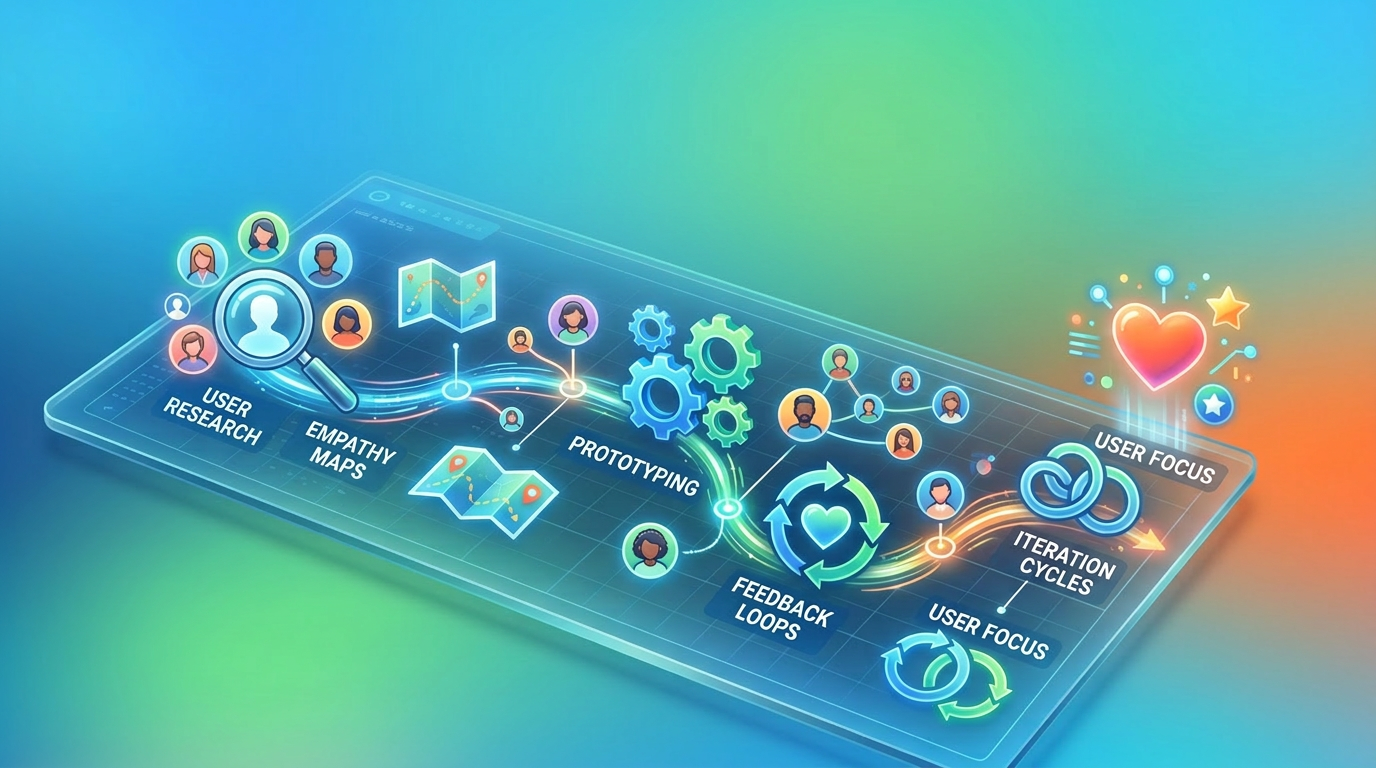
User research produces substantial data and insights that can effectively inform product design and development decisions. Still, many teams encounter challenges moving from insight generation to practical implementation and establishing a future state that outlines a comprehensive path from MVP to final product delivery. Research reports derived from user studies must offer strategic and actionable guidance to support meaningful product improvements; otherwise, their value is diminished.
A future state articulates the product’s overarching vision, strategy, and blueprint. It is founded on insights gathered during user research, including detailed analysis of user personas and their associated journeys. These findings enable teams to develop a targeted and prioritized roadmap, facilitating organizational clarity around long-term product goals, typically spanning three to ten years. Such future state roadmaps provide stakeholders with enhanced visibility and motivation, supporting informed decision-making, business strategy development, and resource allocation.
The Post-Research Gap
Following comprehensive user research initiatives—which often encompass interviews, workshops, and usability studies—teams typically deliver presentations and supporting documentation. While stakeholders may recognize the value and significance of these research findings, they frequently revert to established roadmaps and priorities. The underlying issue rarely stems from the quality of insights; rather, it lies within the translation layer that converts these insights into a concise, actionable product strategy.
Bridging the gap between user research insights and strategic decision-making is essential for fostering clarity and focus within an organization. Researchers emphasize methodology and gaining a thorough understanding of user needs and experiences, aiming to inform an ideal product roadmap. Conversely, product teams and leadership prioritize business value, prioritizing initiatives, and achieving measurable results. Without a structured approach linking research with strategic objectives, organizations may default to intuition and internal politics rather than evidence-based user understanding.
Several factors contribute to this gap. When research insights are not explicitly aligned with business outcomes—such as customer retention, revenue generation, or risk mitigation—they may be perceived as informative rather than imperative. A lack of shared perspective regarding current user journeys and pain points makes consensus on improvement targets difficult. Furthermore, without clearly articulated opportunities and future-state scenarios, stakeholders often leap directly from identifying problems to proposing features, bypassing critical strategic planning stages. The solution does not lie in conducting additional research, but in leveraging existing research more effectively to inform an optimal future state.
Mapping The Future State
The “future state” refers to a clearly defined vision of the optimal experience users should have with a product or service. It acts as a guiding blueprint, informed by research and strategic goals, that helps teams imagine what success looks like before actual implementation.
For existing products, the future state reimagines the current user journey by mapping out an ideal or best-case scenario, showing how things could work at their best. For new products, it sets out the optimal journey for something not yet built, serving as a north star for design and development. In both cases, critical insights from user research shape the design of this envisioned future experience.
The ideal future state is established through several key steps: first, craft a clear problem statement based on research findings; second, build shared ownership by collaborating with cross-functional teams; third, transform insights into bridge artifacts such as maps and blueprints; fourth, tell a compelling story that connects data to vision; and finally, prototype and validate the future state with users and stakeholders [1][2].
Step 1. Craft a Clear Problem Statement
After research is completed, teams should translate their findings into focused problem statements. By analyzing observed patterns and insights, they can uncover users’ underlying needs. This process leads to the identification of concise and specific opportunities for improvement.
Step 2. Build Shared Ownership Through Collaboration
A compelling future state emerges through teamwork—not just from researchers alone. Engage product managers, designers, and engineers in synthesizing ideas and building alignment. Joint workshops help turn insights into “how might we…” opportunity statements. Co-creating journey maps helps visualize experiences and highlight pain points. Stakeholders can then prioritize opportunities based on impact, effort, and strategic alignment, connecting user issues with business objectives like market growth or operational efficiency.
Step 3. Transform Insights into Bridge Artifacts
Bridge artifacts support the transition from research to a tangible vision for the future. Tools like opportunity maps, which link user needs to business goals and feasibility, clarify trade-offs. Current state journeys build shared understanding, while future state journeys offer an aspirational view of the user experience. Service blueprints connect user actions with backstage processes and systems.

Step 4. Tell the Story
A compelling narrative resonates more with stakeholders than isolated research findings. Strong storytelling moves from data to insight, then to opportunity, and finally to vision. Structure your story by describing the present reality, highlighting user experiences and pain points, identifying improvement opportunities, and showcasing how the future state journey addresses key moments.
Step 5. Prototype and Validate the Future State
Prototyping the future state lets teams explore potential solutions early—before committing significant time and resources. Prototypes can range from simple sketches to high-fidelity mock-ups, enabling teams to interact with and refine critical parts of the journey. Testing these prototypes with users and stakeholders validates the direction and reveals gaps or areas for improvement.
Maintaining the Research-Delivery Cycle
The shift from research to envisioning the future state is not a one-time hand-off, but rather an ongoing, iterative process. As illustrated in the future state mapping section, tools such as opportunity maps and service blueprints help teams continuously bridge user needs with business objectives, adapting as features are released and the market evolves.
By embedding research into planning cycles and regularly revisiting roadmaps and design reviews, organizations can ensure that each new insight directly informs the path forward. This sustained loop not only keeps the vision relevant and actionable, but also empowers teams to proactively respond to emerging challenges and opportunities, fostering lasting impact for both users and the business.
Discover more from Baha Jabarin
Subscribe to get the latest posts sent to your email.